Health tech · Mobile app · MSc UX
Clink
An app that helps young people cut down or stop drinking, without judging them.
Clink is an alcohol management app for young people who are ready to change their relationship with alcohol, but need more than a drink log to do it. I designed it with three other students during my MSc in User Experience Design at Birmingham City University. It brings sobriety tracking, an AI chat, anonymous community support and therapist access into one app.
The challenge
- 10.4MPeople in the UK drinking at increasing or high-risk levels
- 602,391Estimated dependent drinkers in England
- 82%Of them not receiving any treatment
From our desk research, using public data and academic studies.
The barriers aren't just practical. Stigma makes people afraid to ask for help. Depression, anxiety and trauma often co-exist with alcohol dependency, each making the other worse. And the apps that existed were passive: log your drinks, see a calendar, get a reminder. They counted drinks, but didn’t help with why people were drinking.
Our brief was to design something that makes it easier for young people to ask for help, and keeps supporting them on the bad days as well as the good ones.
How might we help young people in the UK cut down or stop drinking, without judging them, and keep supporting them through the good days and the relapses?
My part
There were four of us, all UX designers, working from research through to testing. This is what I did:
- Led the competitive analysis of Sober Sidekick, NHS Drink Free Days and Try Dry January, looking for gaps in progress tracking, moderation and community safety.
- Ran the survey of 11 people on drinking habits, motivations and app use, and pulled the findings together.
- Co-created four personas, two of them with disabilities (paraplegia and visual impairment), so accessibility was there from the start.
- Mapped the app: empathy maps, journey maps and an information architecture in FigJam across six areas, from the digital diary to therapists.
- Sketched and wireframed 12+ screens on paper, then low-fidelity wireframes for the diary, home, AI onboarding and community.
- Worked on the high-fidelity Figma designs for onboarding, home, therapist booking and community.
Key insights from research
Survey findings
- Drinking frequency: about half drank two or three times a week, and 2 people drank four or more times a week.
- No apps in use: almost nobody used an app to manage their drinking.
- Health as the motivator: 6 of the 11 said health was their main reason to quit, so the app needed to make the health side visible and personal.
- Lifestyle-based attempts: most quit attempts relied on exercise, yoga or distraction, not structured support.
- Mixed appetite for help: about half would look for professional help through an app, and about half were open to a community of people trying to quit. Both had to be in the product.
Competitive findings
- Sober Sidekick: strong on community and anonymous sharing, but no proper progress tracker, and moderation risks with unfiltered posts.
- NHS Drink Free Days: good at awareness and milestones, but passive. It could help cut down, not help people overcome.
- Try Dry January: engaging moods, badges and missions, but not designed for long-term change.
No app combined progress tracking, a community, access to professionals and personal support. So that’s what Clink set out to do.
Solution highlights
01
Conversational AI
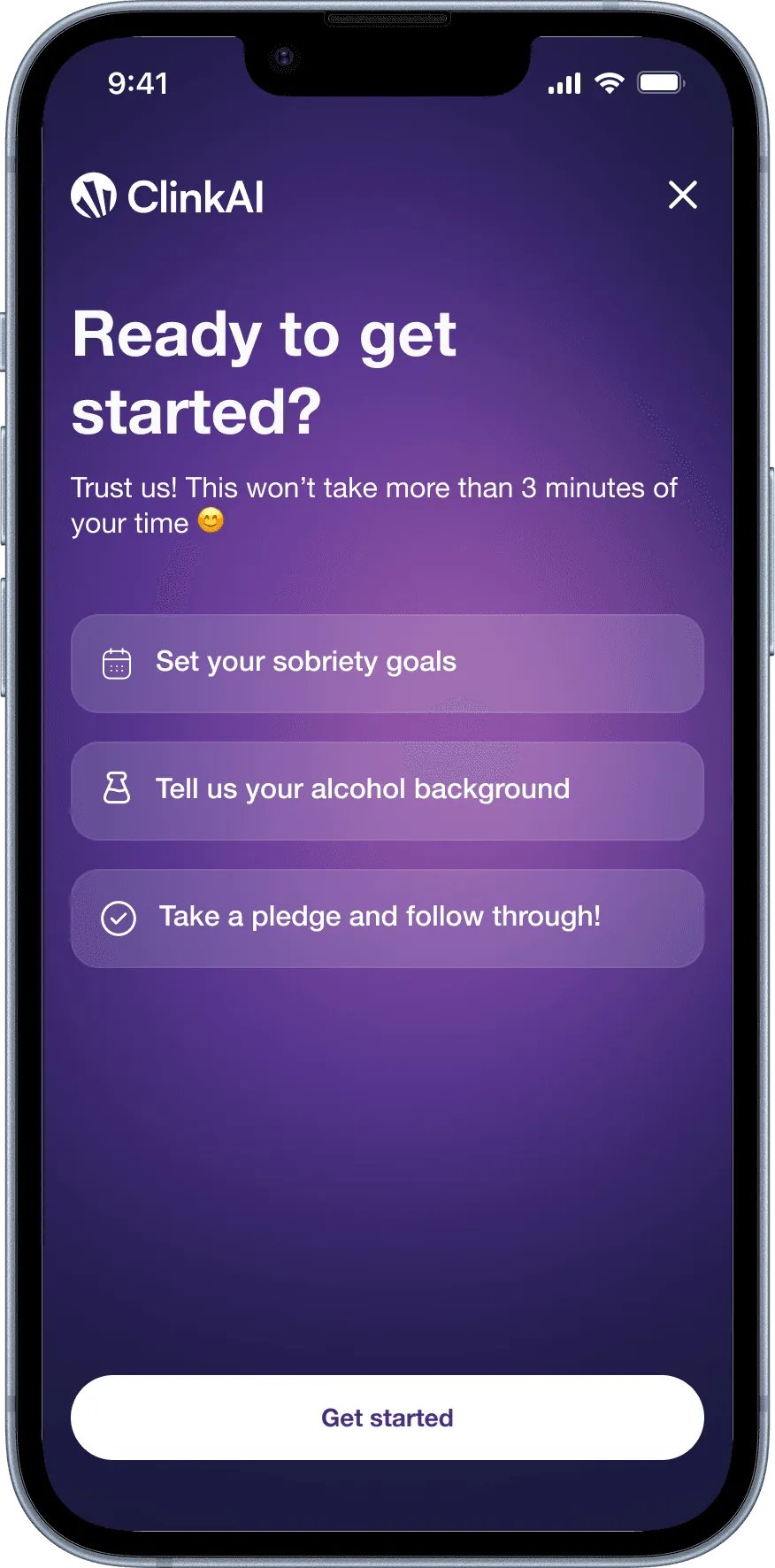
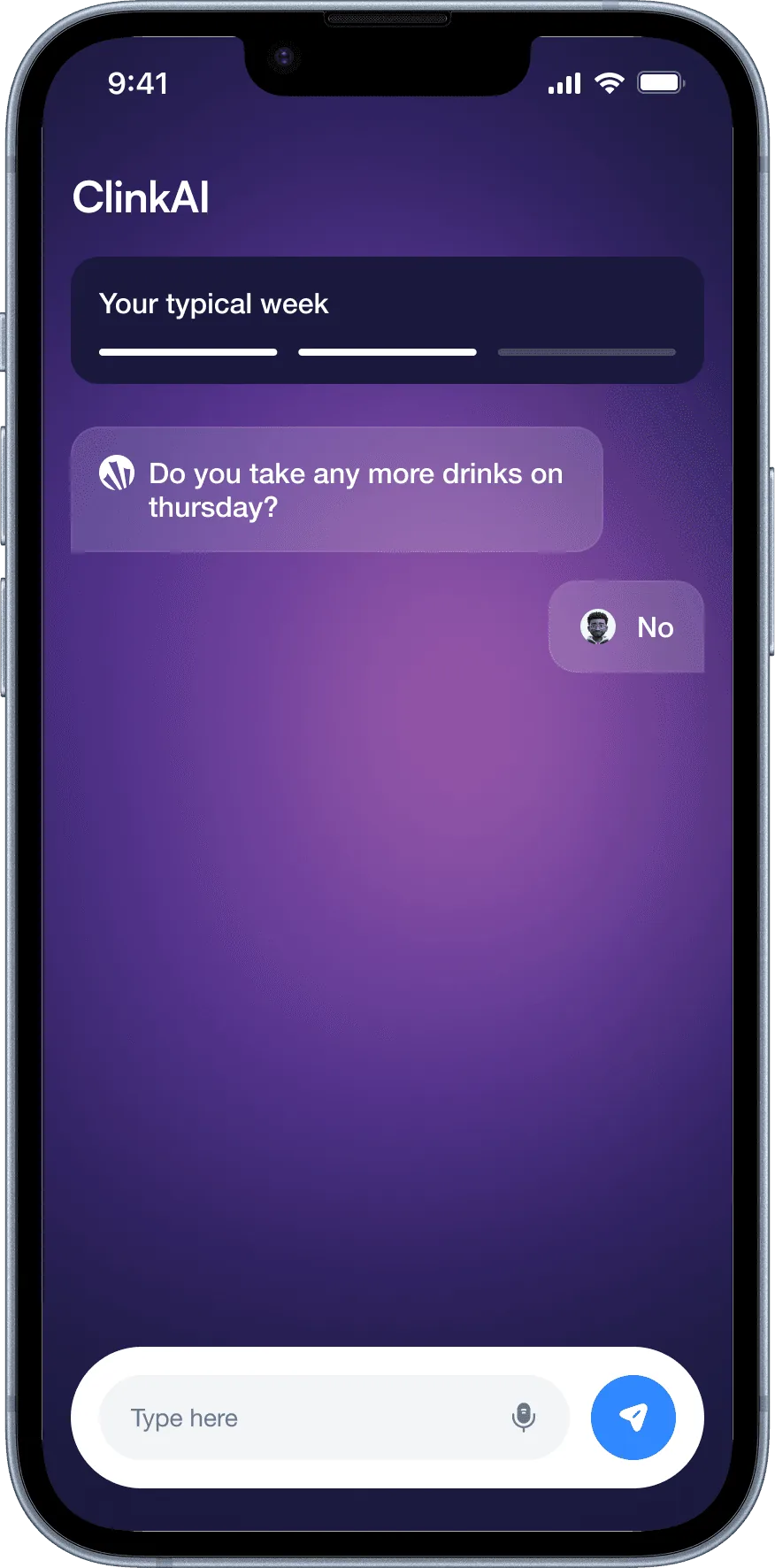
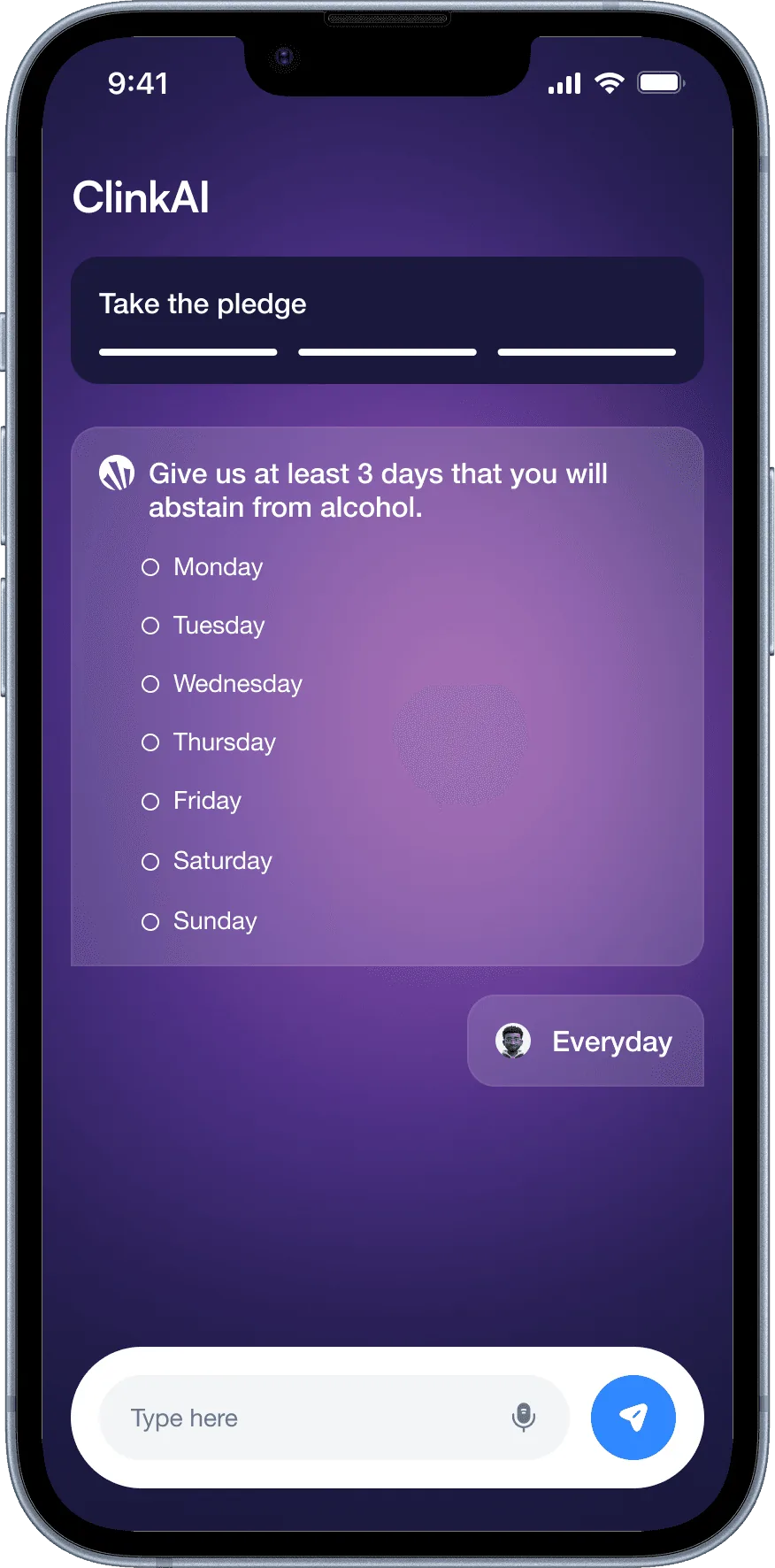
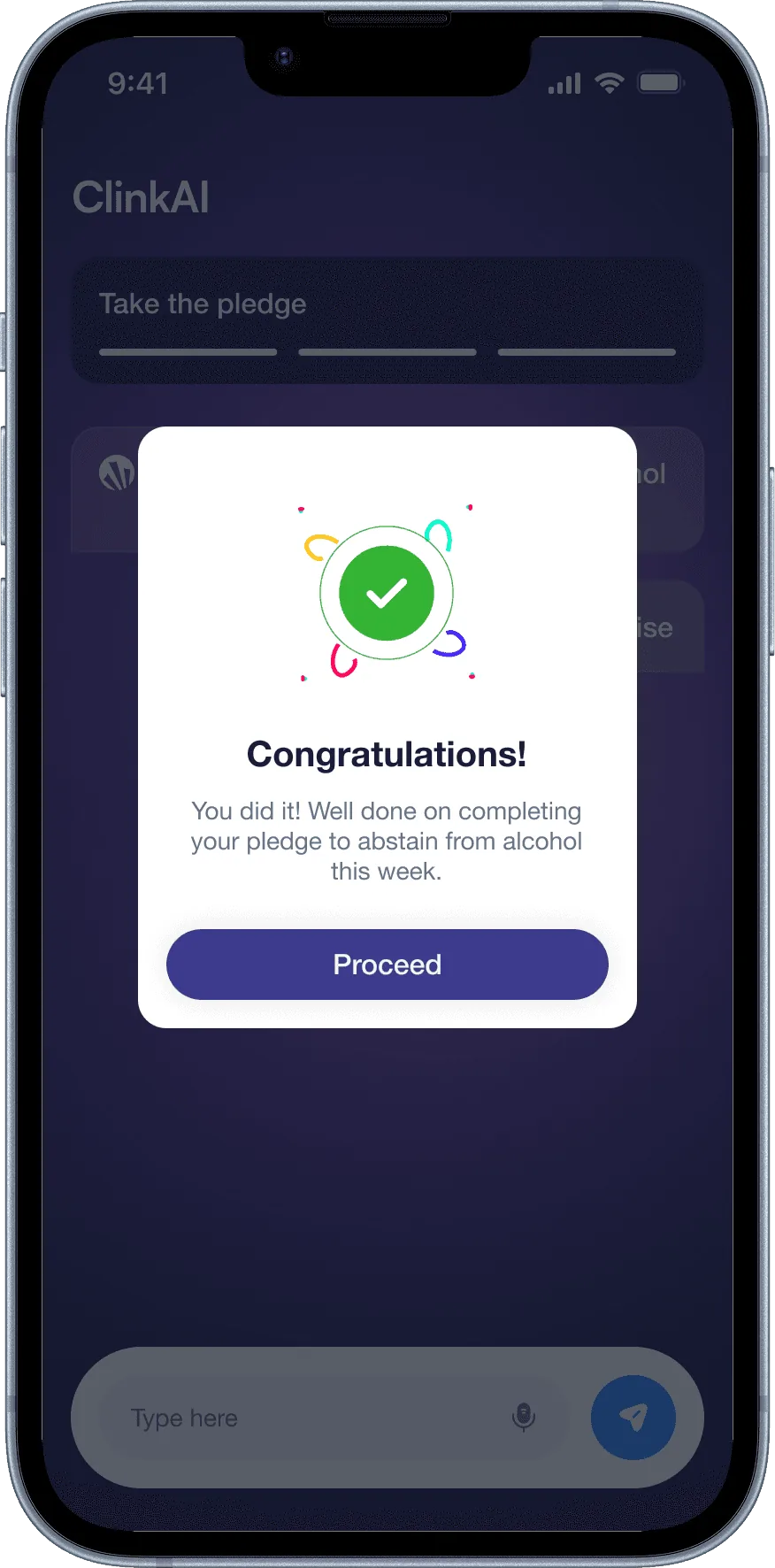
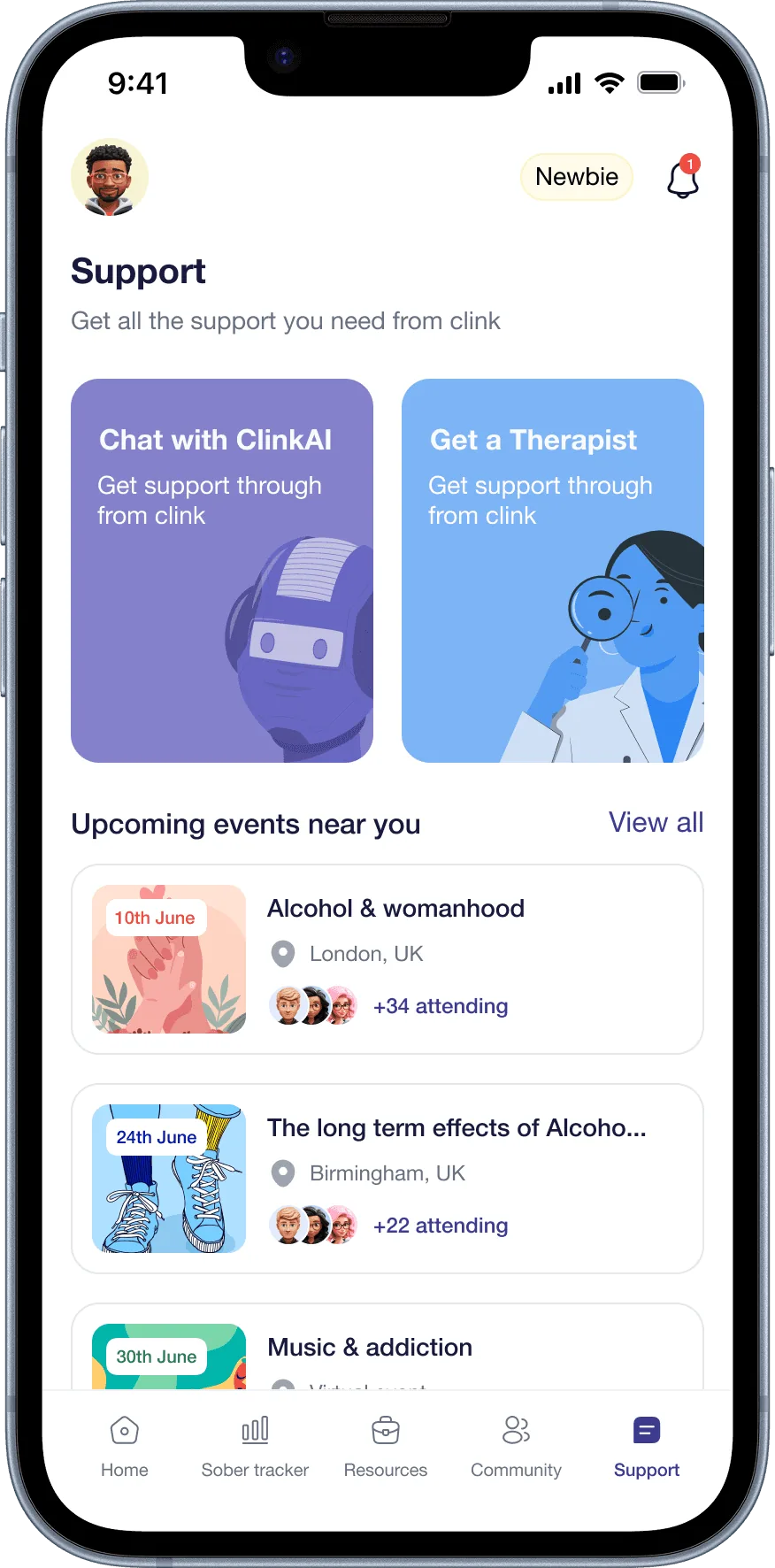
Most quit attempts in our survey relied on distraction rather than real support. The AI chat gives people a private place to talk through cravings, log how they feel and get guidance. It also replaces the sign-up form: you answer questions in a conversation, so it feels like talking to someone.
02
A personalised dashboard
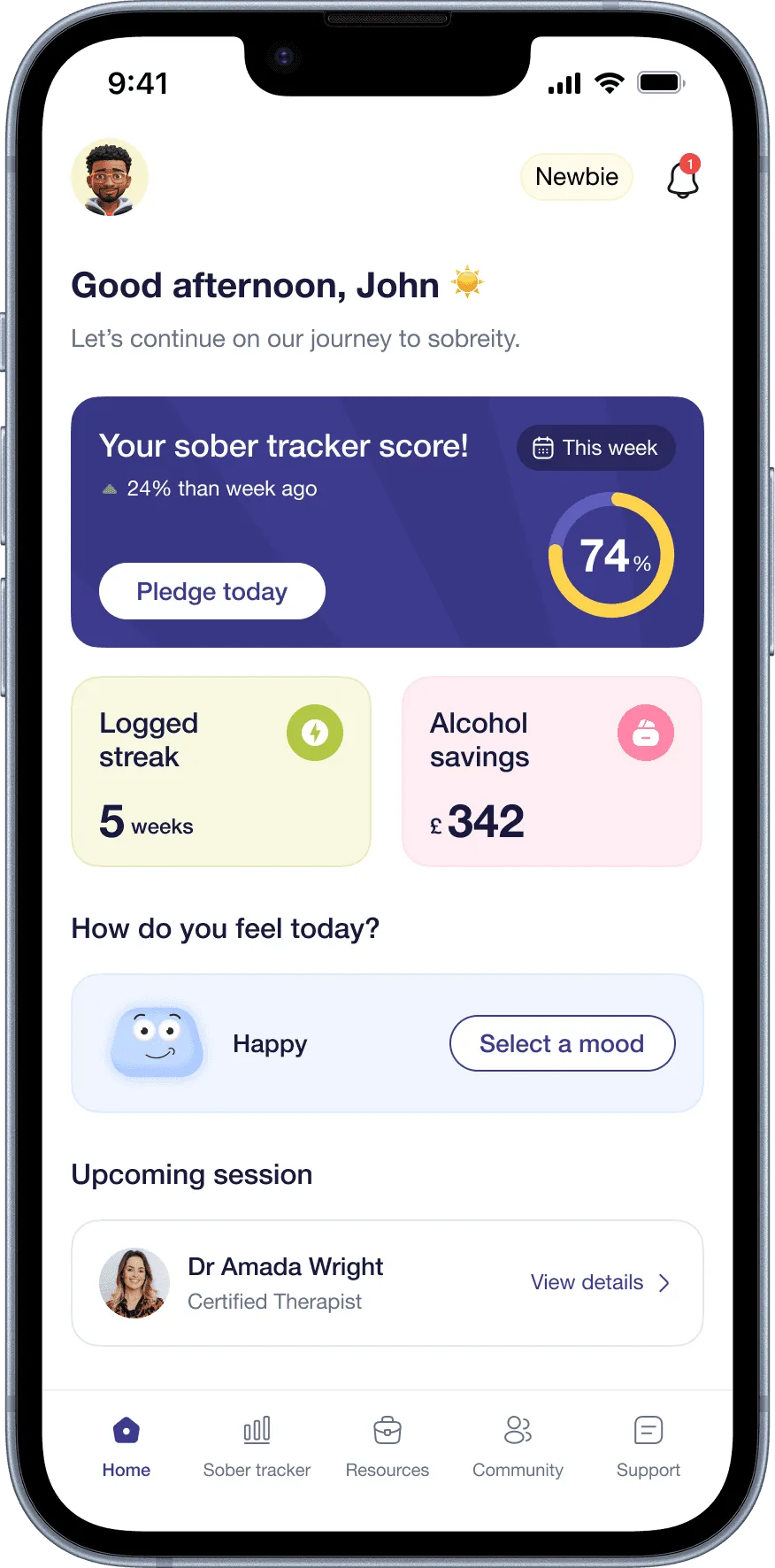
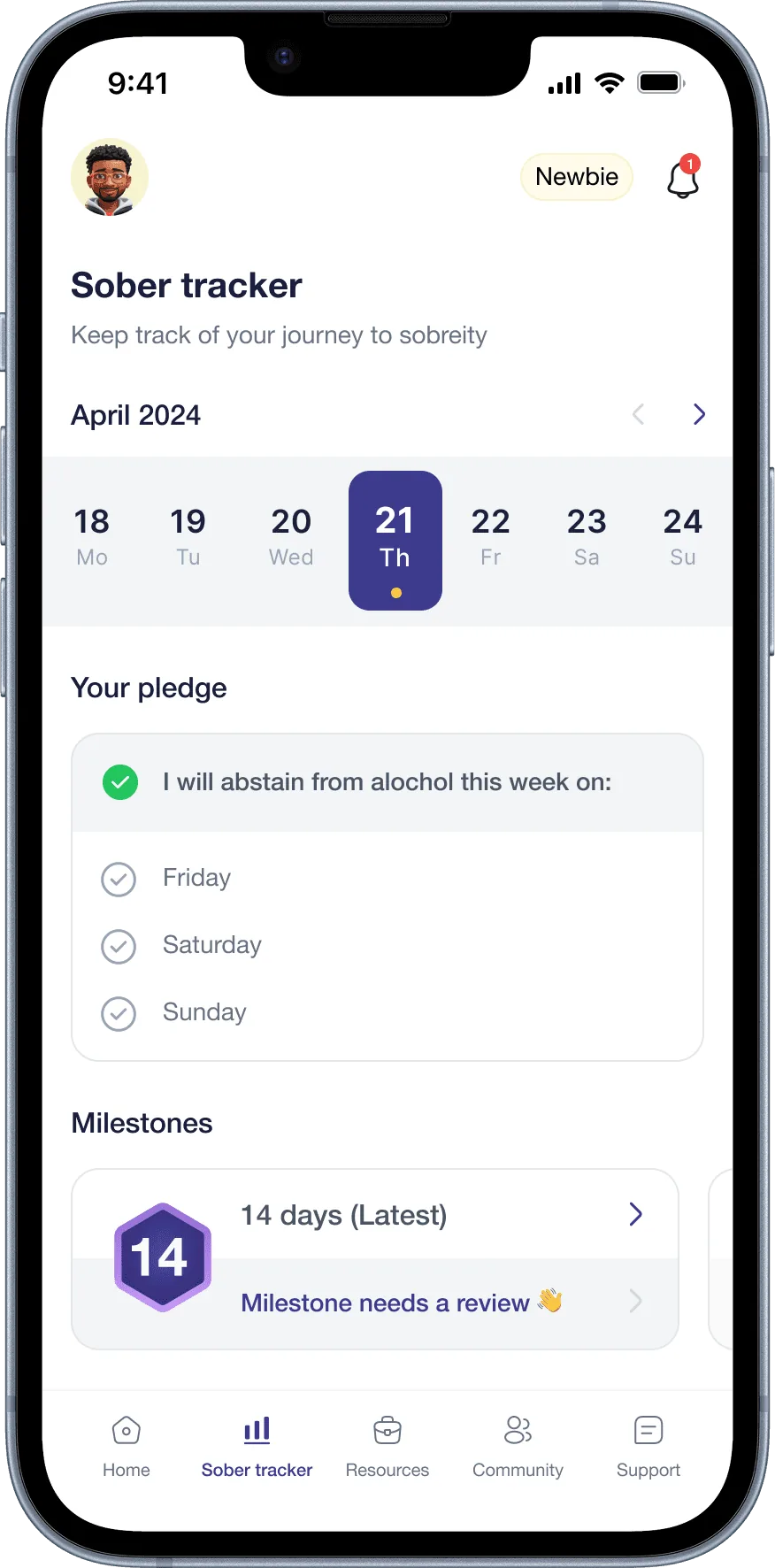
Existing apps tracked what people drank, not how they were changing. The dashboard shows a sober score, a streak, money saved and a mood check-in, so it answers three questions: am I improving, what am I gaining, and how do I feel today?
03
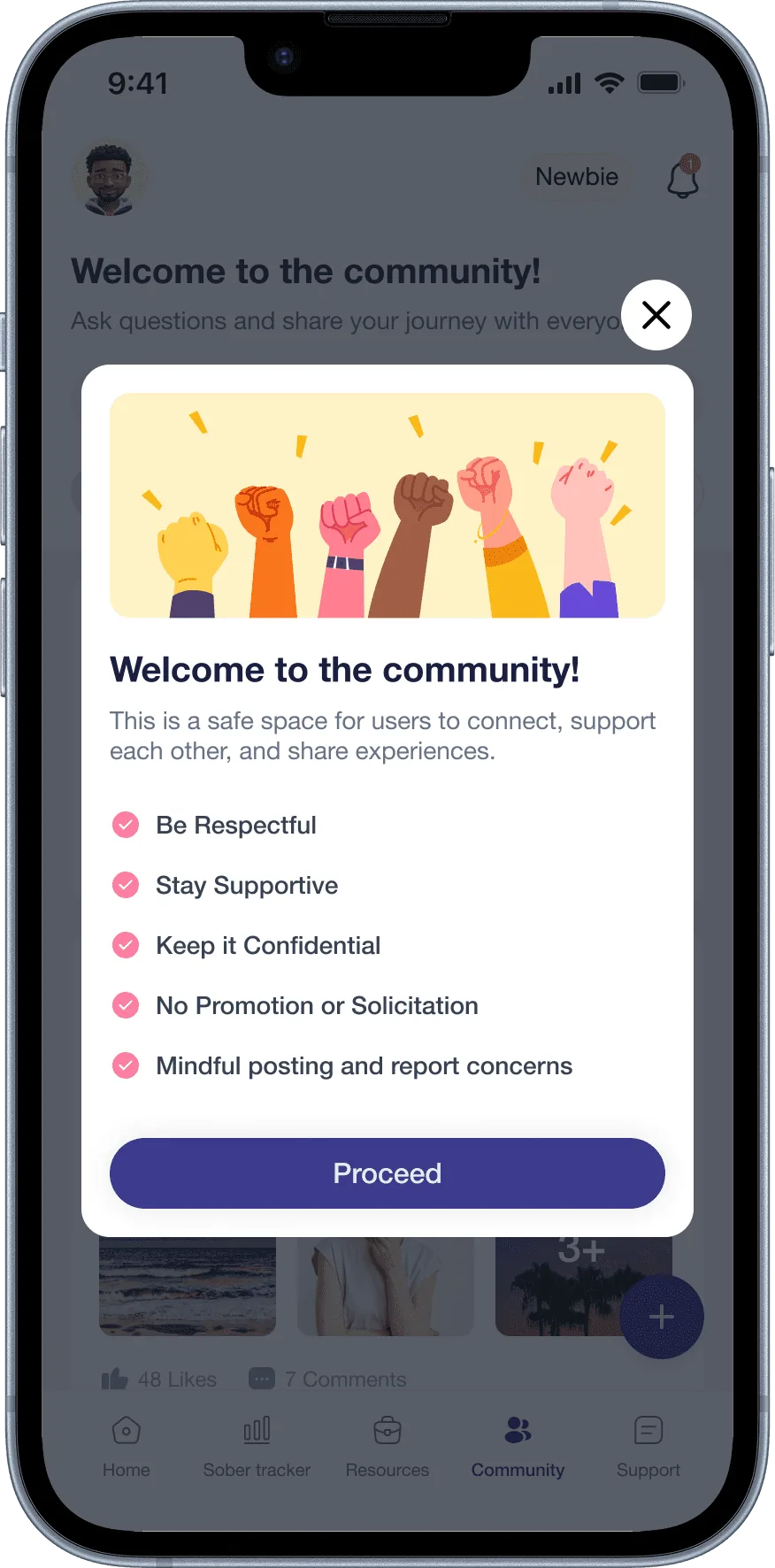
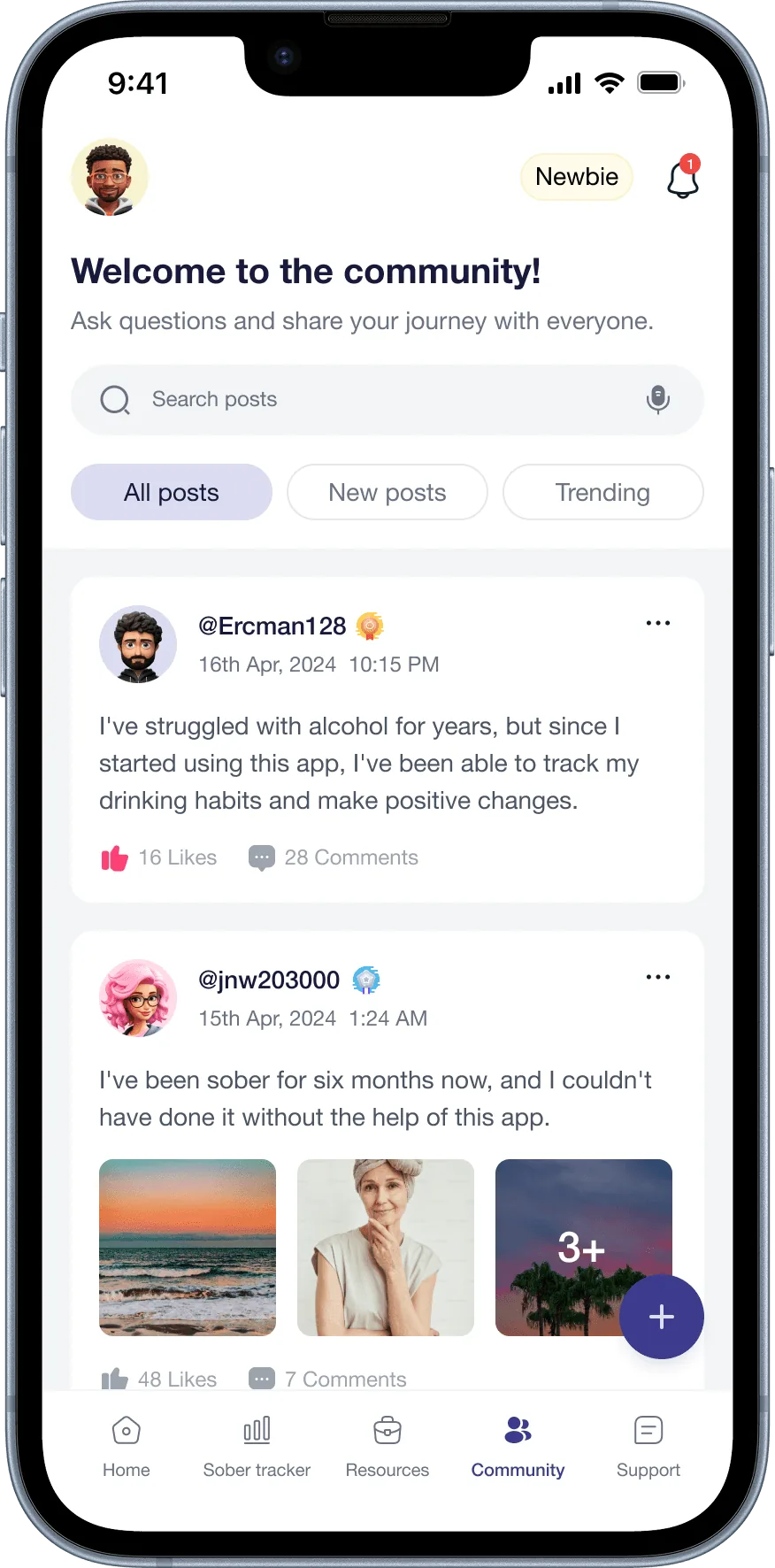
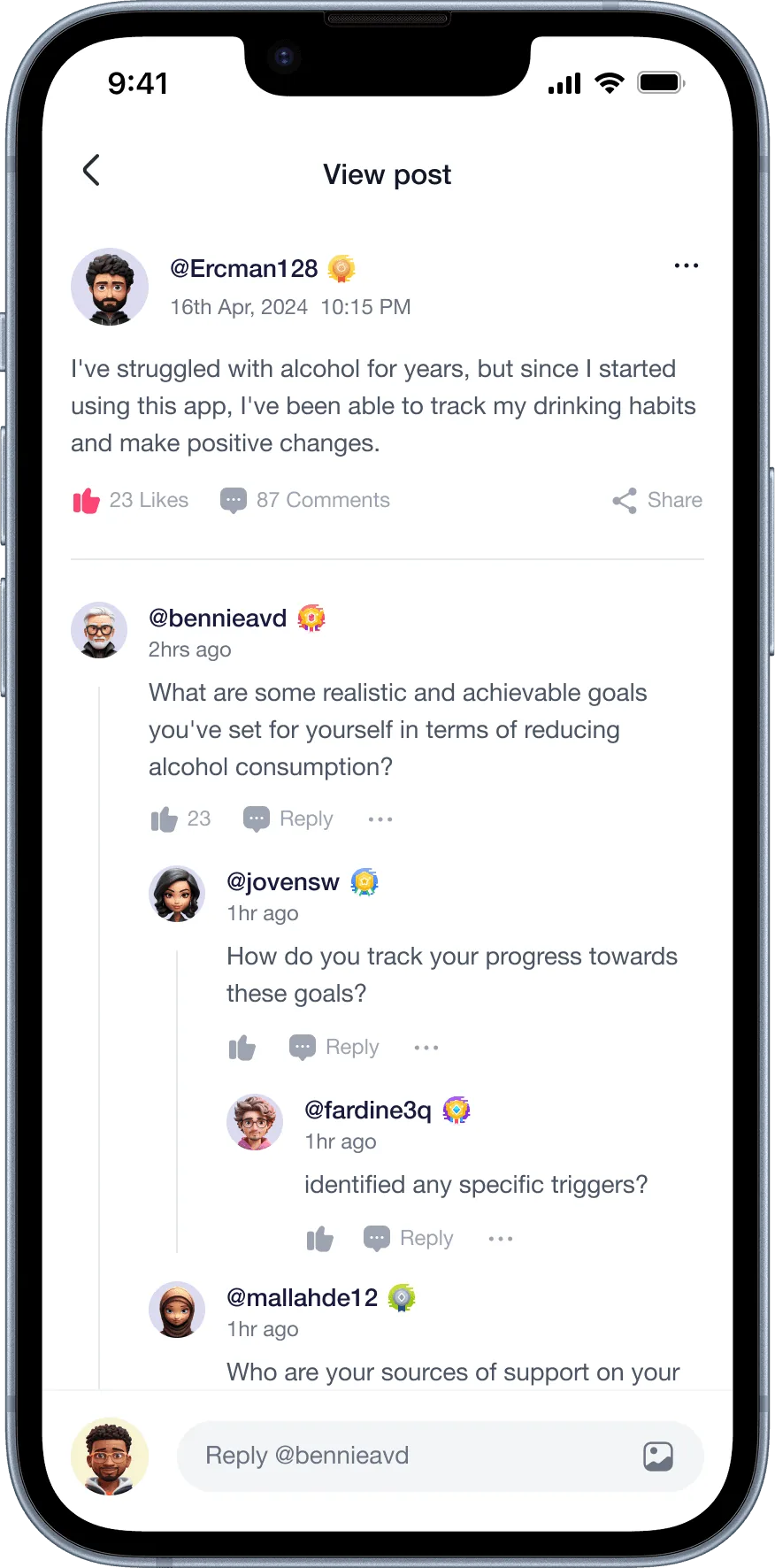
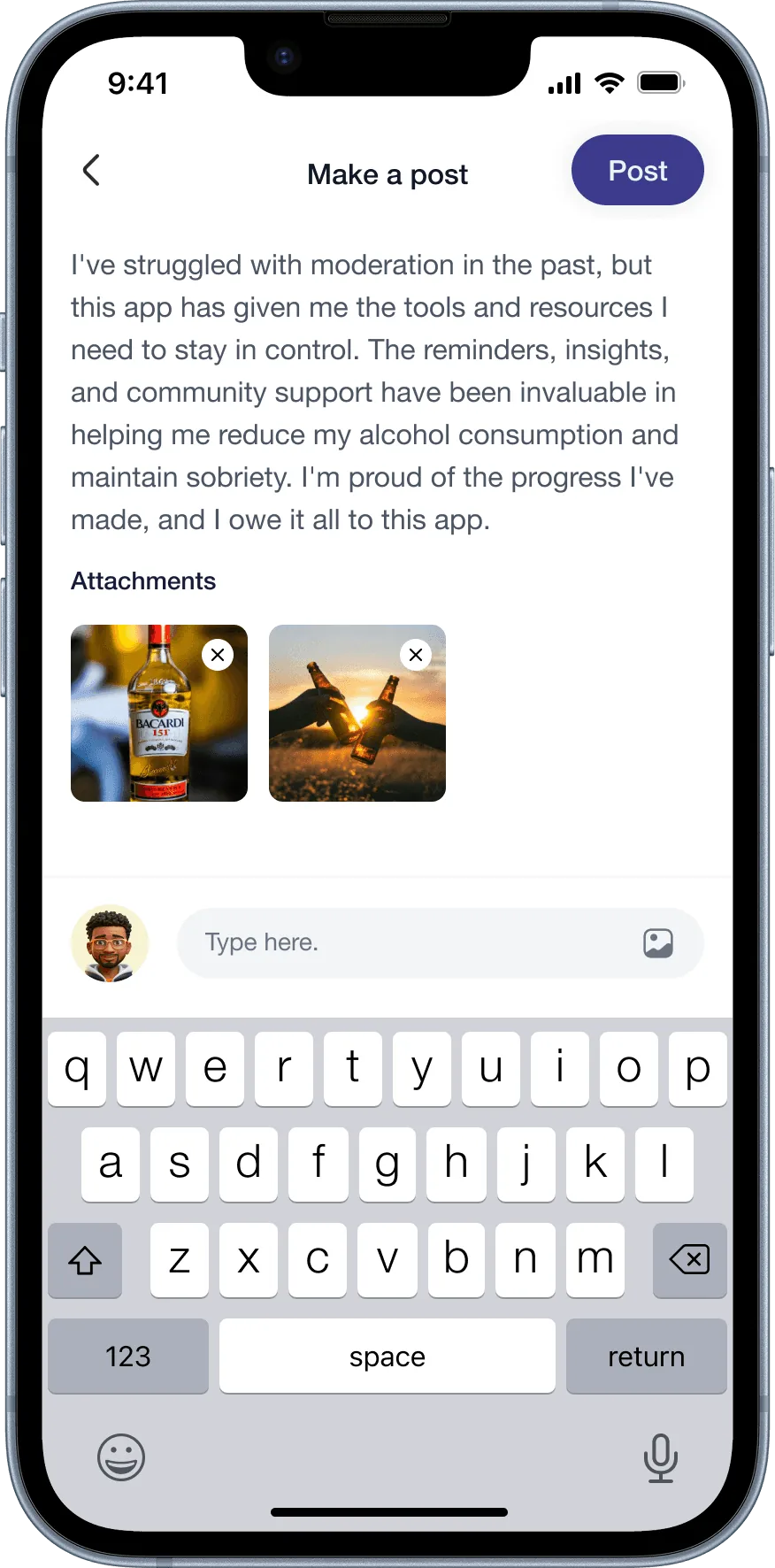
An anonymous support community
About half the people we surveyed wanted to talk to others trying to quit, but stigma stops a lot of people asking for help. So the community is anonymous by default, with no direct messages, which avoids the safety problem we saw in Sober Sidekick. People can post, comment and give empathy badges, and posts are moderated.
04
Therapist access
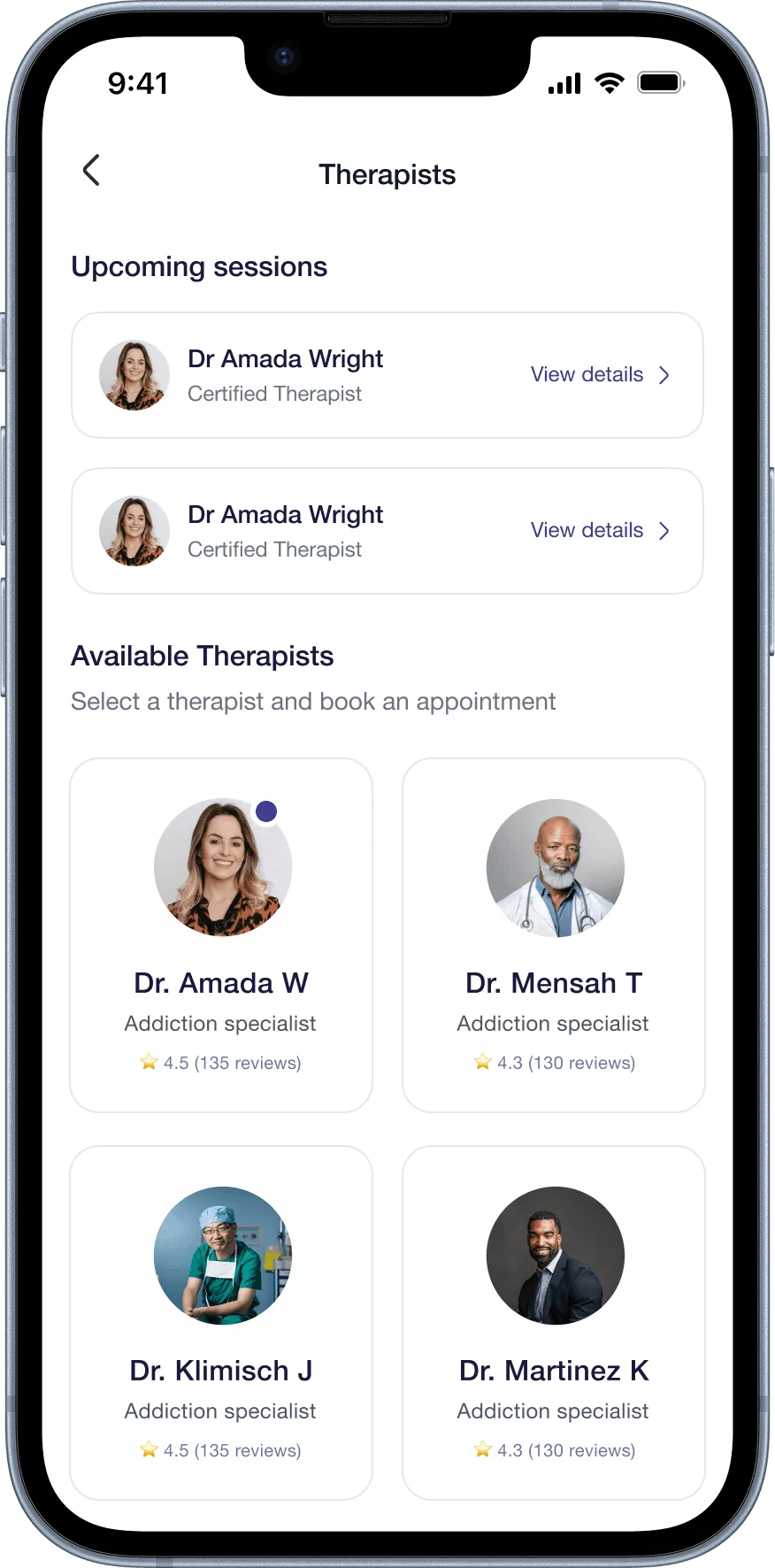
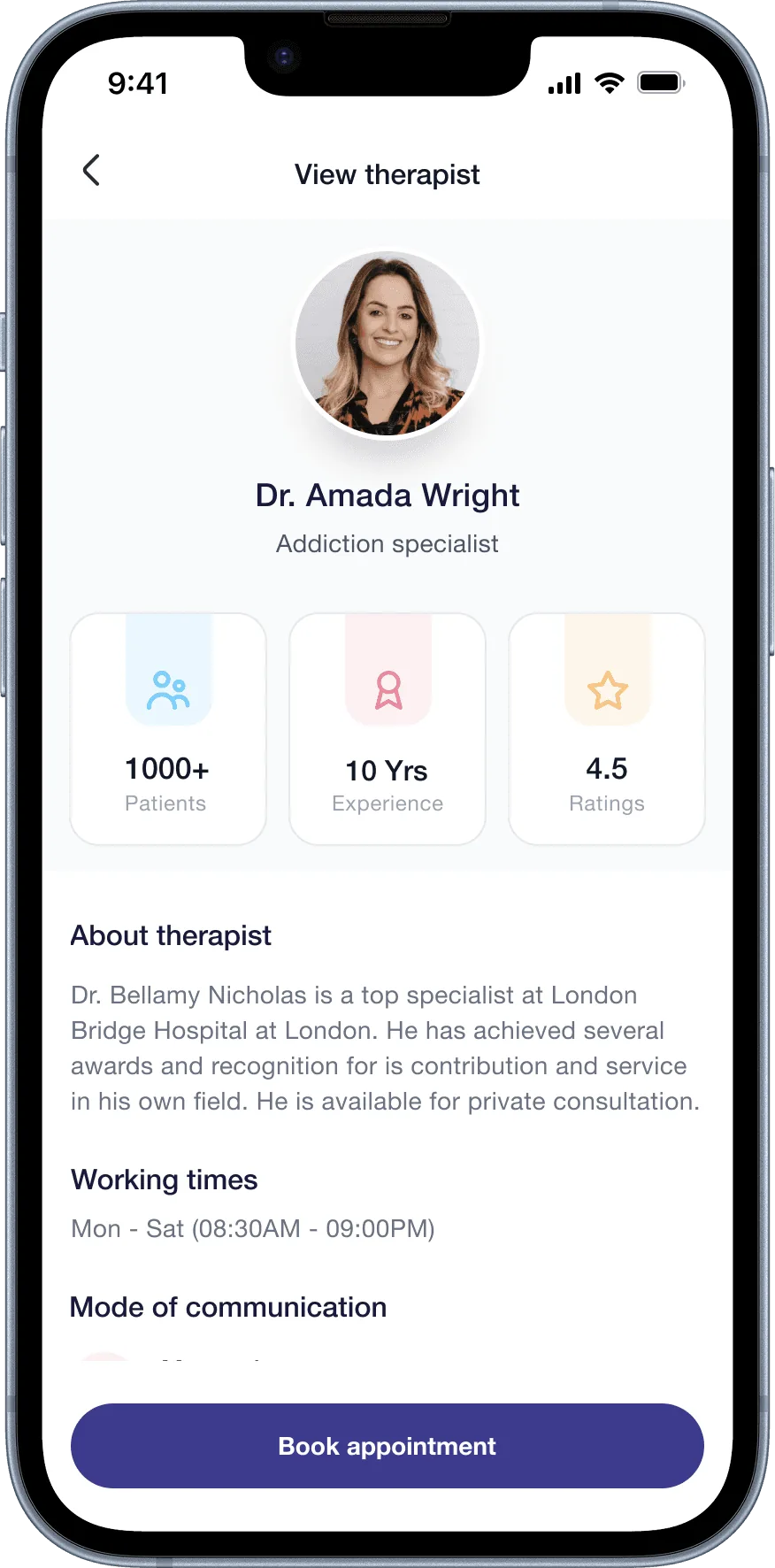
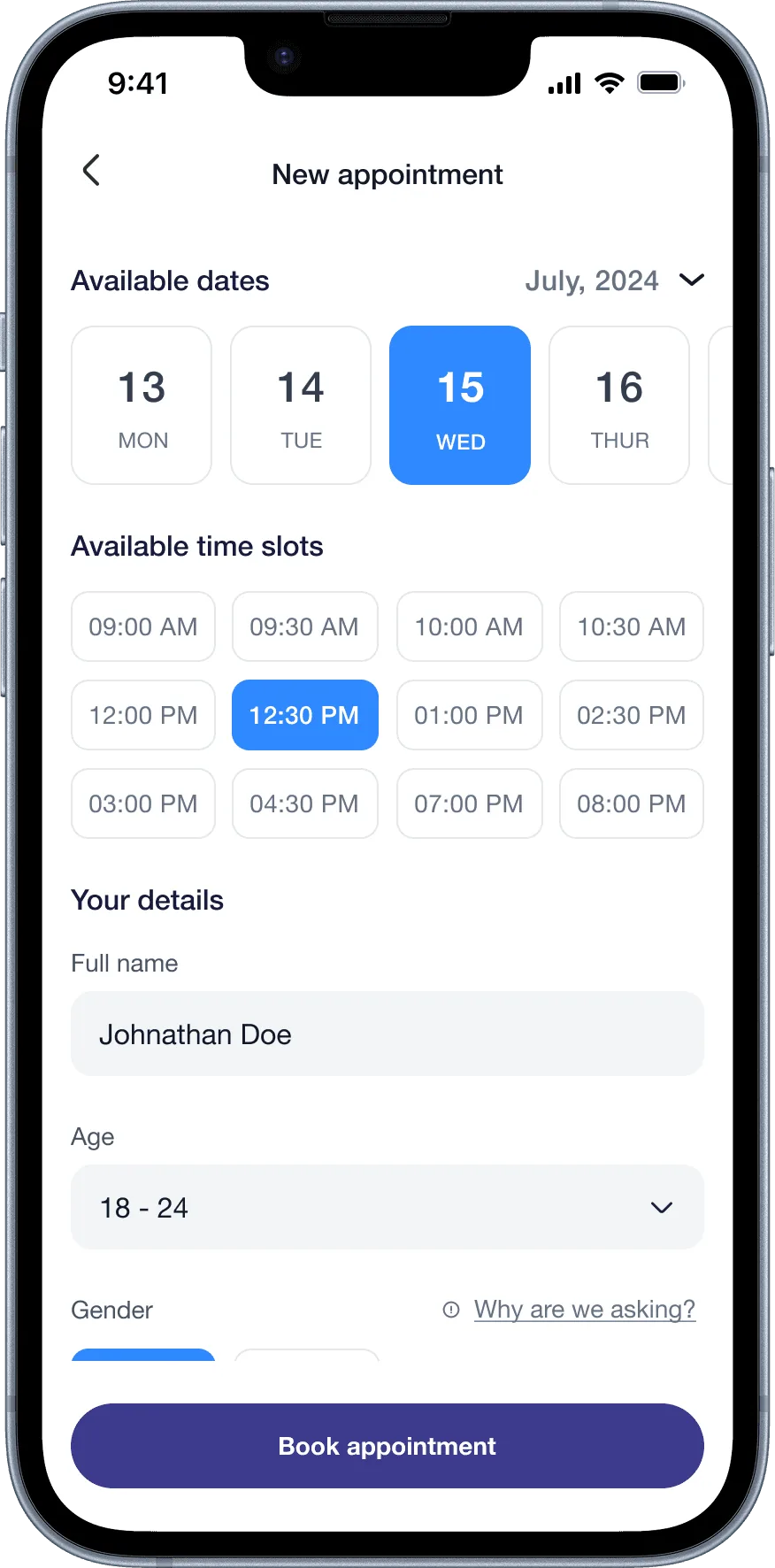
None of the apps we looked at let you reach a licensed therapist in the same place. In Clink you can browse certified therapists, see what they specialise in and how many patients they’ve seen, and book with a calendar and an email confirmation. You see their credentials before you book, because trust came up again and again in our research.
05
Inclusive by design
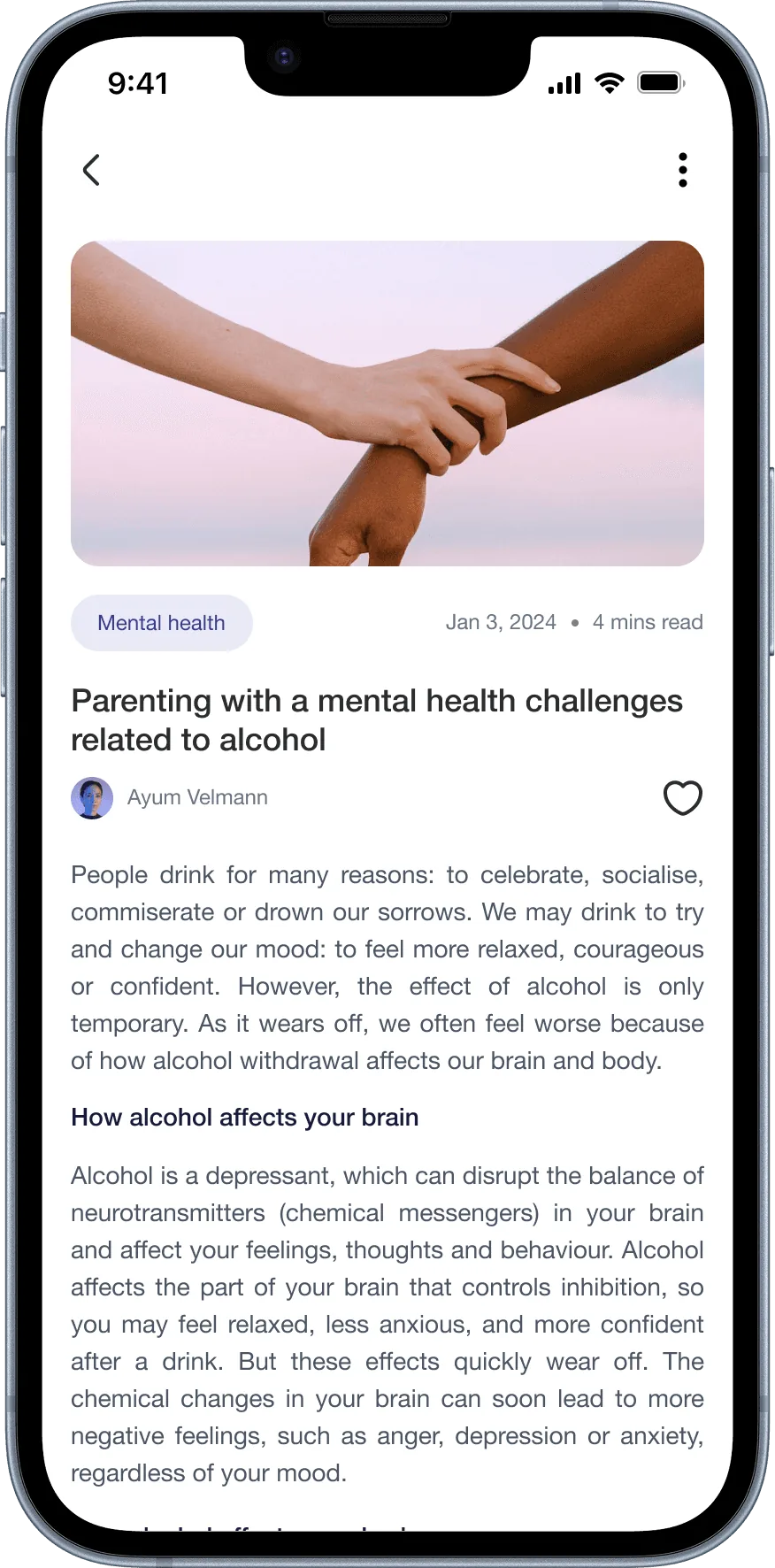
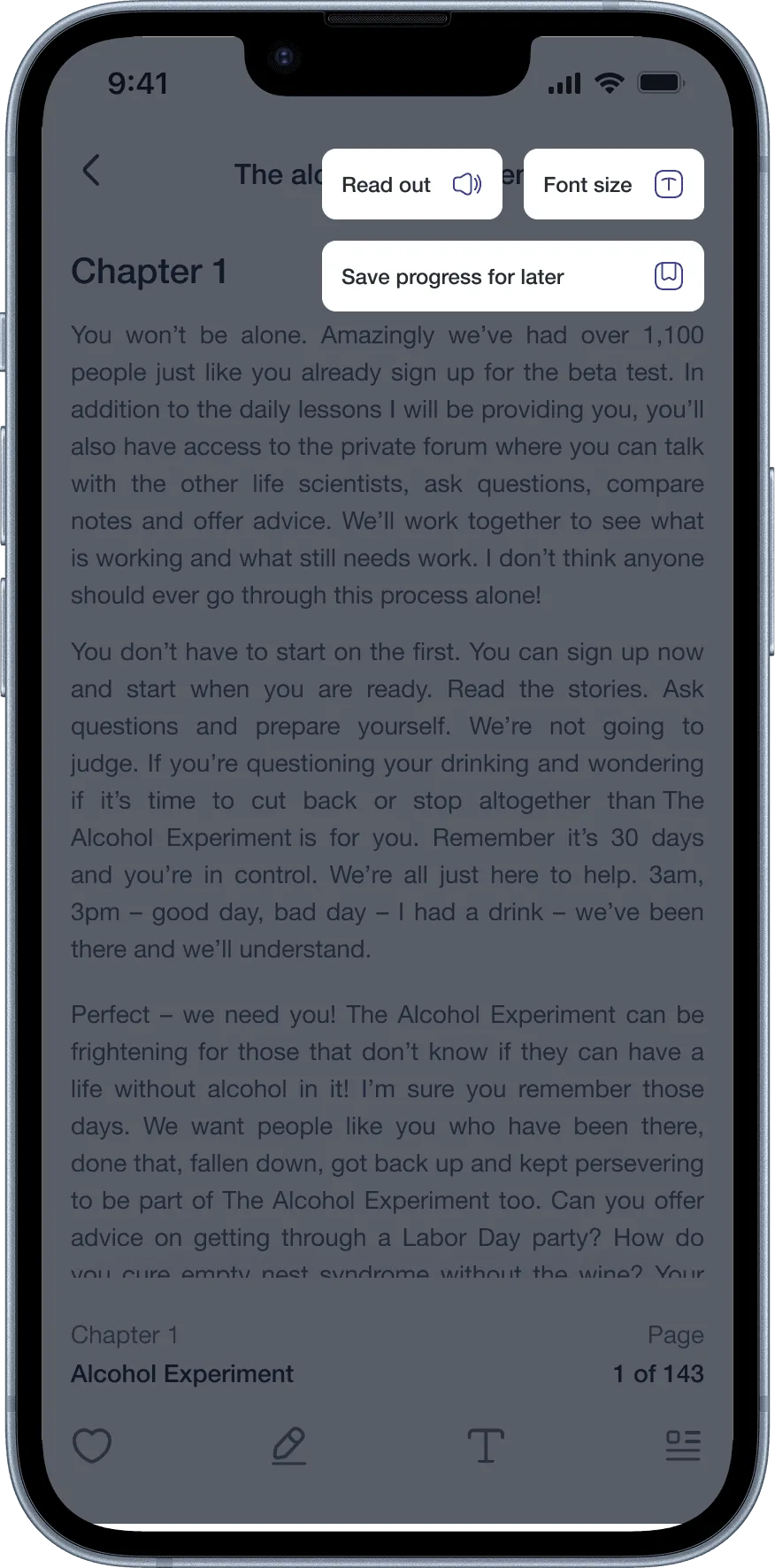
Two of our four personas had disabilities: William, who has paraplegia, and Maria, who is visually impaired. For Maria, that meant screen reader support, voice-guided navigation and accessible content. It made us ask of every decision: does this work if you can't see it, or can't use your hands?
The results
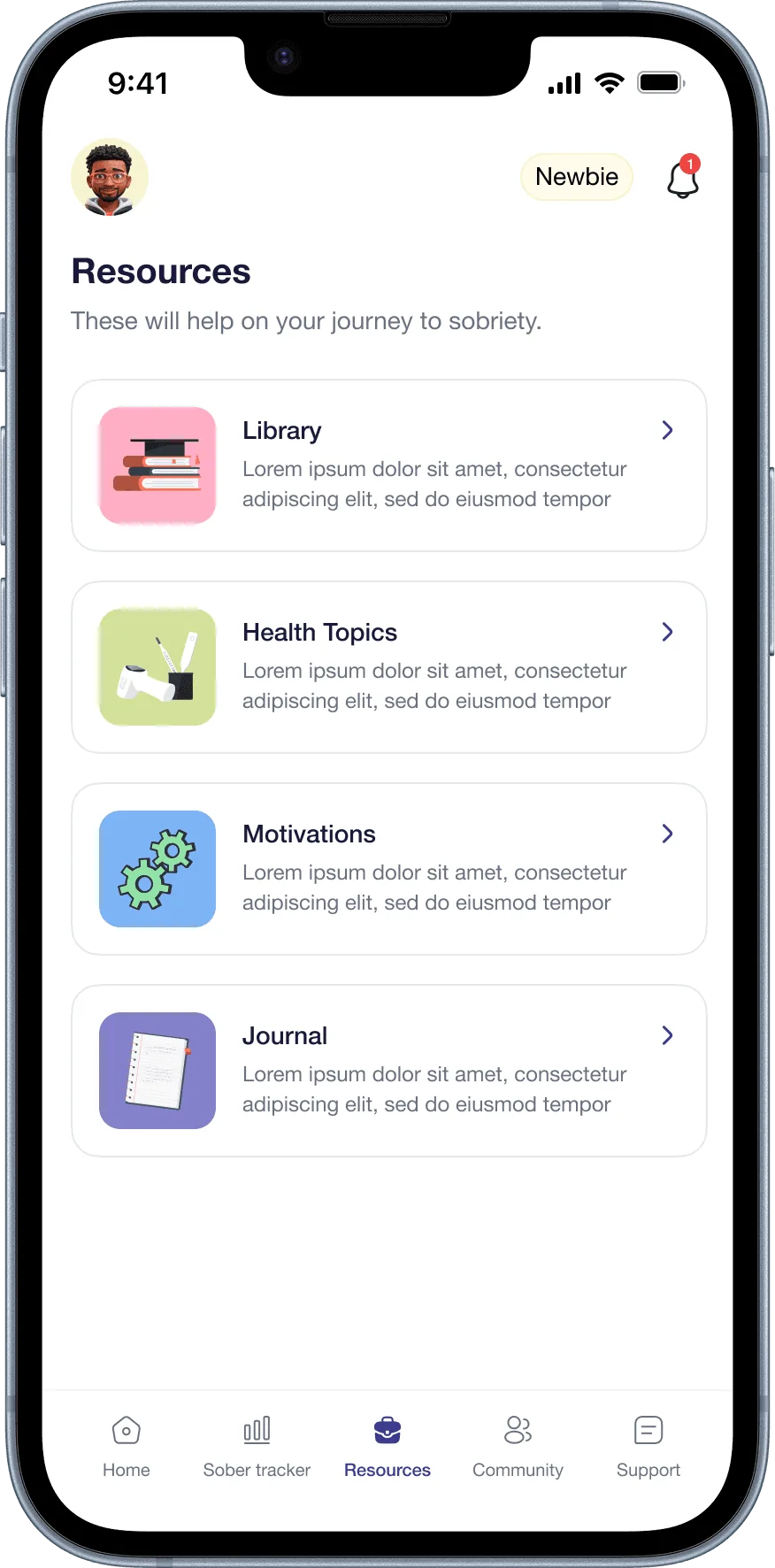
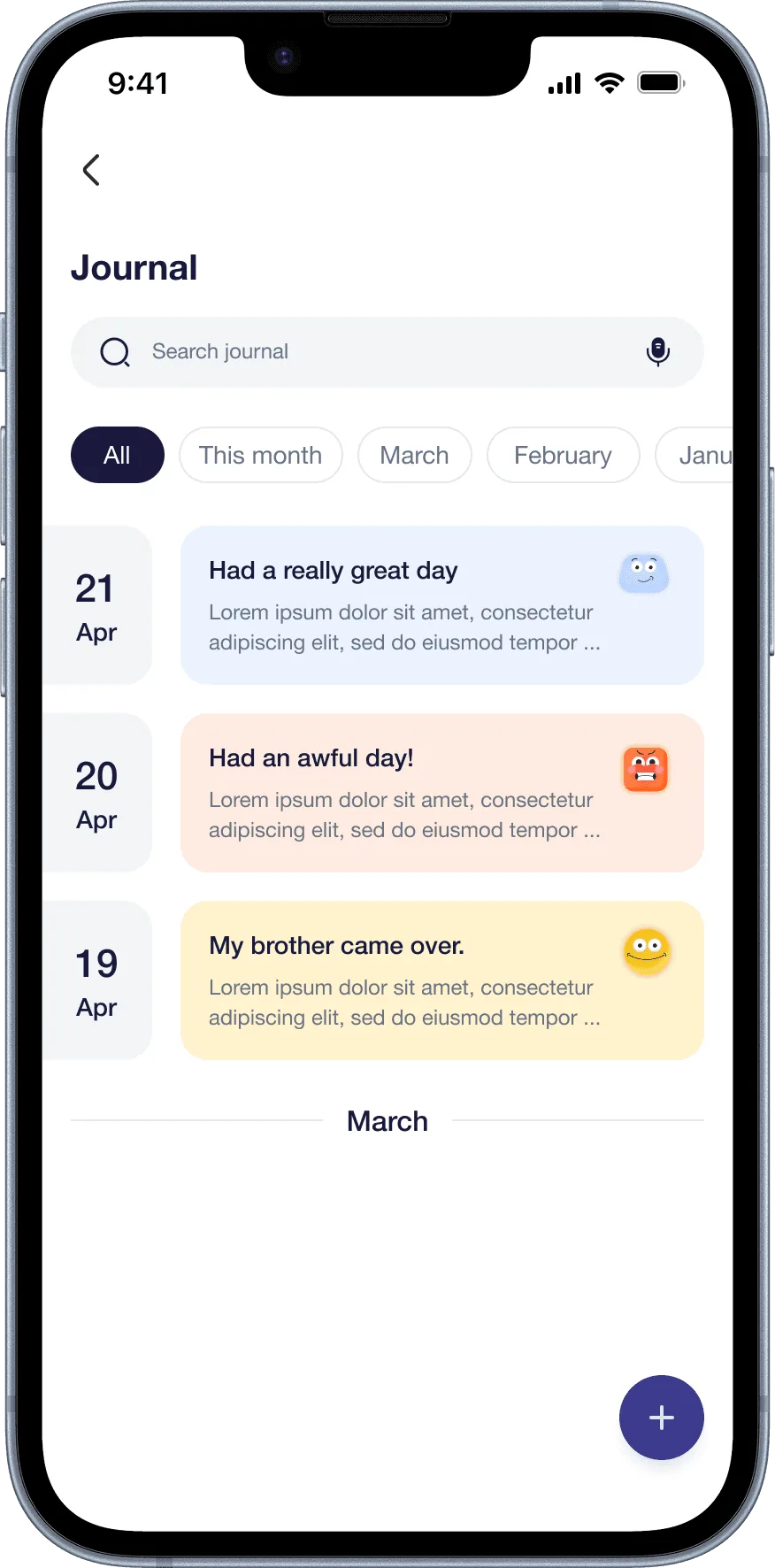
- A clickable prototype covering onboarding, home, the diary, community, therapist booking and health resources.
- Usability tests with general users. We couldn’t get access to people in recovery, so we tested whether people could find their way around and complete the main tasks.
- The community and the digital diary got the best response, and wearable integration came up as something to add next.
- Next step: testing with people who are actually trying to cut down or stop.
What I learned
- 01
People in recovery need safety, empathy and autonomy, not just tools
Every decision had to pass a test: does this feel supportive, or like surveillance? The difference between a tracker that motivates and one that shames is almost entirely in the framing.
- 02
Designing for inclusivity makes things better for everyone
Designing for Maria's visual impairment and William's paraplegia made us question assumptions we'd otherwise have left alone, and the app was better for everyone because of it.
- 03
Sobriety is personal
People's reasons for quitting were deeply individual: health, family, money and self-worth. Clink lets people define their own version of success instead of imposing one metric on everyone.
- 04
Group design is a design challenge in itself
Coordinating four designers took the same skills as coordinating four stakeholders: clear communication, a shared language, and a willingness to critique and be critiqued.
Want to talk about this project? I'd genuinely like to hear from you.